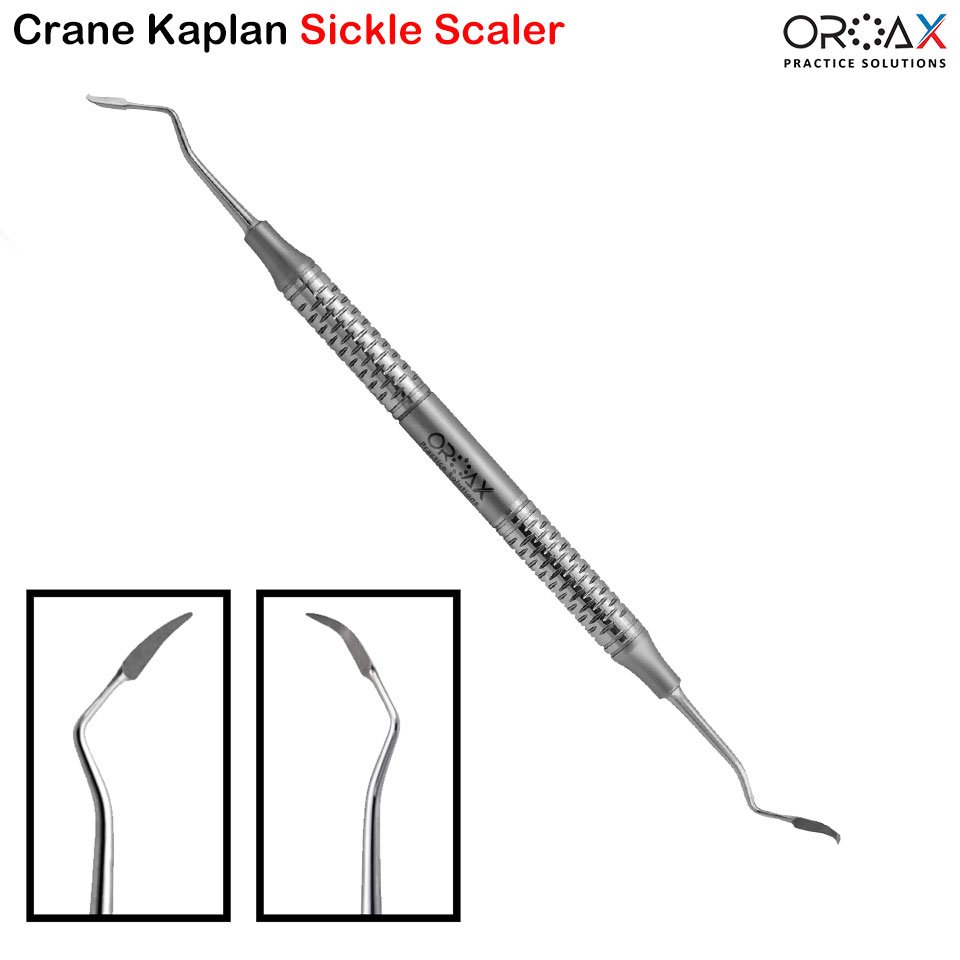
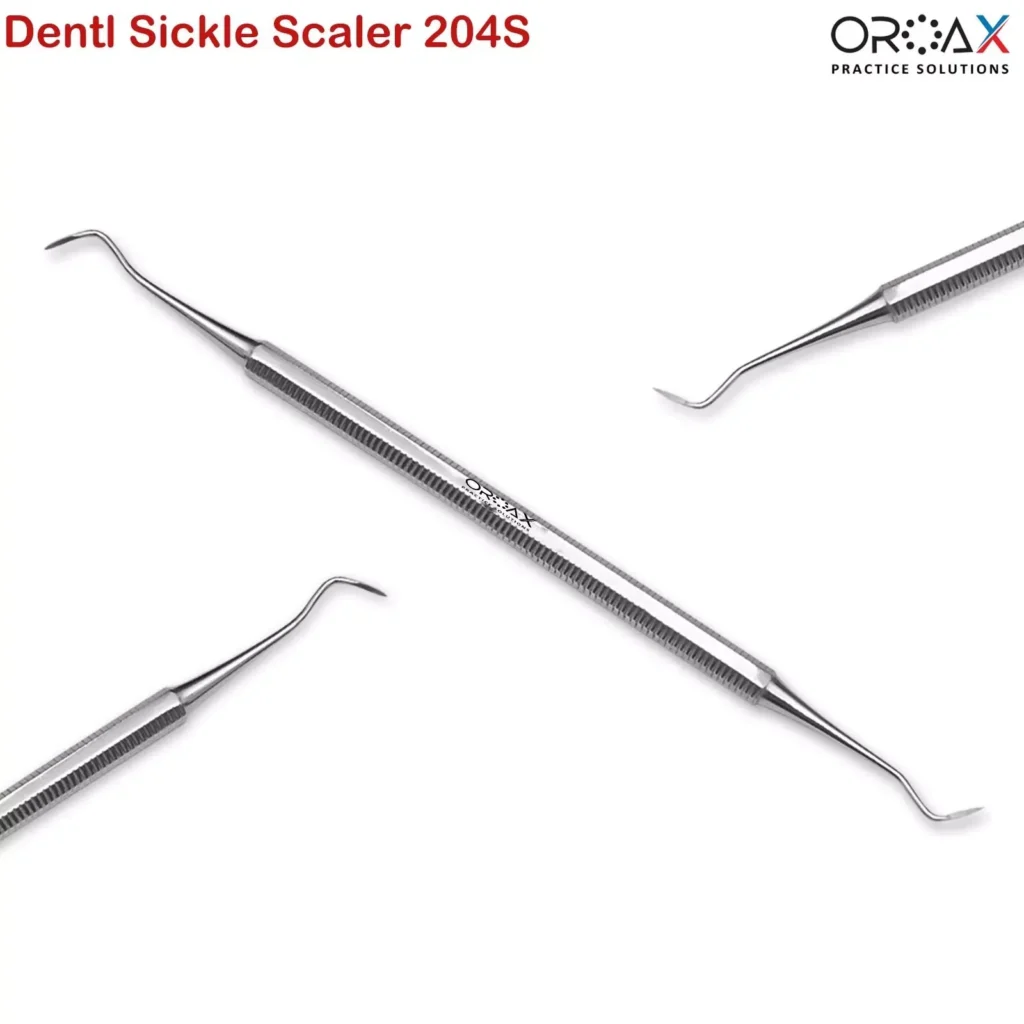
Dental scalers are hand instruments designed for removing supragingival plaque, light calculus deposits, and stain from tooth surfaces during prophylaxis and routine cleaning appointments. Dental hygienists and general dentists use diagnostic scalers for basic debridement procedures that maintain oral hygiene between comprehensive periodontal treatments. OROAX offers Crane Kaplan and 204S sickle scaler designs, both crafted from medical-grade stainless steel that meets international quality standards for reliable plaque and tartar removal.
Clinical Applications
- Prophylaxis Cleaning: Scalers remove light supragingival plaque and calculus deposits during routine prophylaxis appointments, maintaining oral hygiene for patients without significant periodontal disease.
- Stain Removal: Sharp scaler blades remove extrinsic tooth staining from coffee, tea, and tobacco, improving aesthetic appearance during prophylaxis procedures.
- Light Calculus Debridement: Scaler working ends fracture and remove minor calculus accumulations above the gumline before they progress to heavier deposits requiring extensive scaling.
- Interproximal Cleaning: Fine scaler tips access tight interproximal contacts to remove plaque and light calculus between adjacent teeth during routine cleaning appointments.
Features & Quality Standards
- Quality Standards: Meets international quality standards for dental hand instruments
- Multiple Designs: Crane Kaplan and 204S sickle scaler patterns provide different working end configurations for varied clinical preferences
- Sharp Cutting Edges: Precision-ground blades remove plaque and light calculus efficiently during prophylaxis procedures
- Octangle Handle Option: The 204S scaler available with 6mm octangle handle provides enhanced grip security and reduced hand fatigue
- Material: Medical-grade stainless steel construction maintains edge sharpness and resists corrosion through repeated clinical use
- Fully Autoclavable: Withstands repeated sterilization cycles at 121-134°C without blade dulling or structural compromise
Proper Care & Sterilization
- Wipe scaler blades immediately after use to prevent calculus from hardening on working surfaces
- Clean with enzymatic solutions and ultrasonic processing before autoclaving
- Autoclave at 121-134°C following standard sterilization protocols
- Sharpen blades when cutting efficiency decreases during clinical use
- Store in organized cassettes with working ends protected from contact damage
Frequently Asked Questions
What is the difference between diagnostic scalers and periodontal scalers?
Diagnostic scalers handle light supragingival plaque and calculus during routine prophylaxis. Periodontal scalers are designed for heavier calculus removal and more extensive debridement in patients with gum disease.
Can these scalers be used for subgingival scaling?
These diagnostic scalers are primarily designed for supragingival use. For subgingival scaling and root planing beneath the gumline, curettes provide better access and safer instrumentation.
How often should scaler blades be sharpened?
Sharpen scalers when you notice decreased cutting efficiency or increased pressure needed to remove deposits, typically every 10-15 patients depending on calculus hardness and instrument usage.
Are these scalers autoclavable?
Yes, all OROAX diagnostic scalers are fully autoclavable at 121-134°C and maintain sharpness and structural integrity through repeated sterilization cycles.