

Explorer
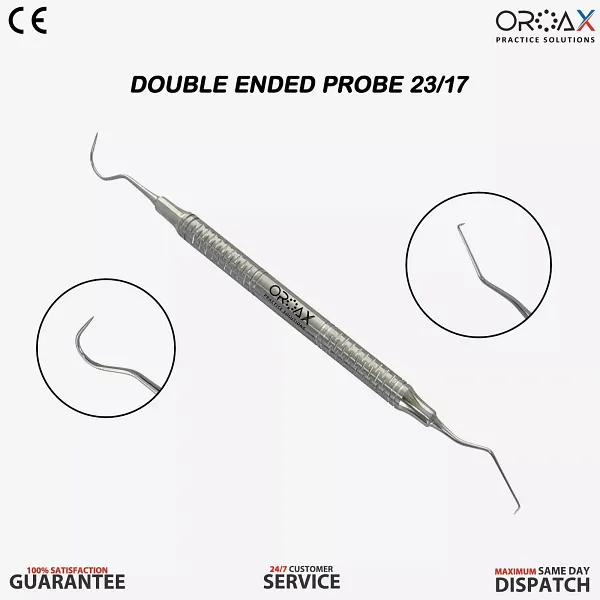
Dental Explorer 17/23 Probe Diagnostic Calculus Probes
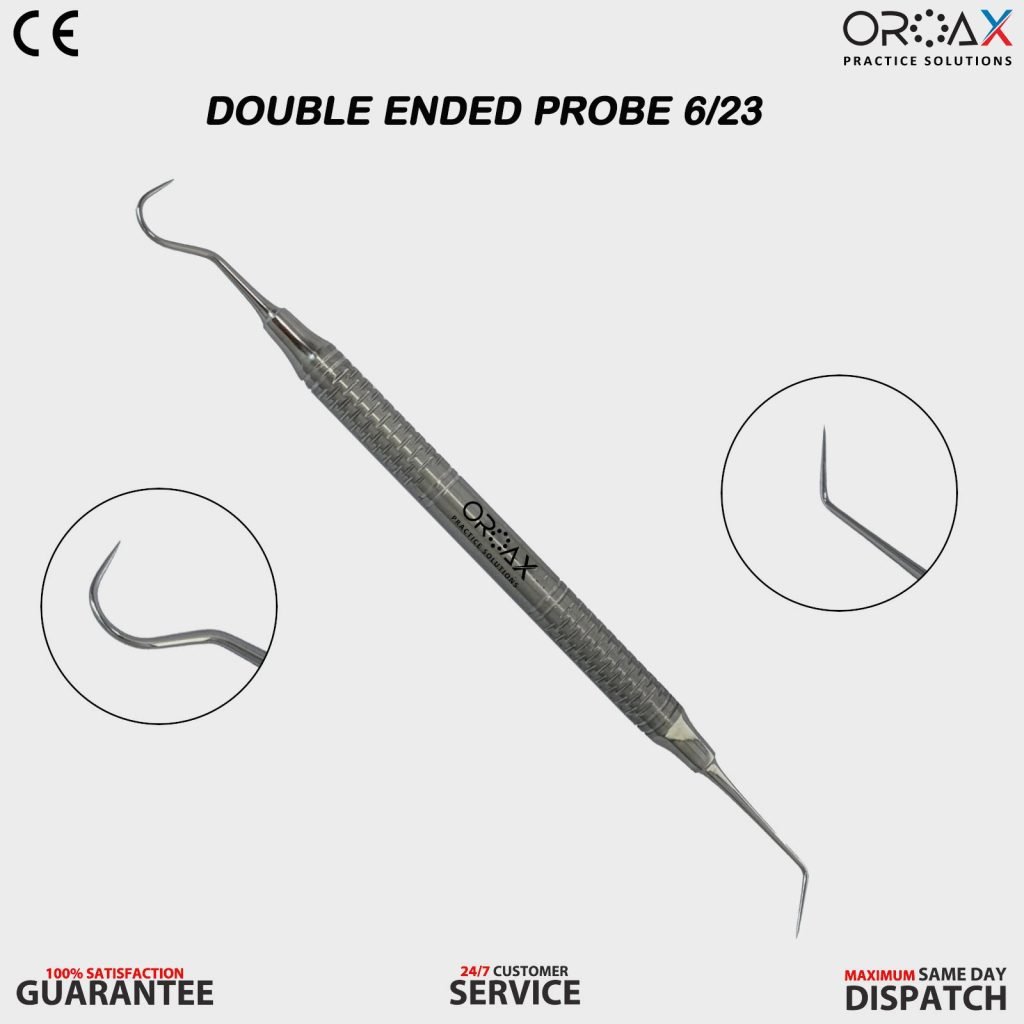


Periodontal Explorer 6/23 Probe Double Ended Examination Scaler
Dental explorers are sharp-tipped diagnostic instruments designed for caries detection, calculus identification, and restoration evaluation during comprehensive oral examinations. General dentists, dental hygienists, and dental students rely on explorers for tactile assessment of tooth surfaces, early carious lesion detection, and detailed examination procedures. OROAX offers Explorer 17/23 and Explorer 6/23 patterns, both crafted from medical-grade stainless steel that meets international quality standards for precise diagnostic capability.
Clinical Applications
- Caries Detection: Sharp explorer tips detect early carious lesions, demineralized enamel, and incipient cavities through tactile sensitivity before lesions become visually obvious during examinations.
- Calculus Evaluation: Fine explorer points locate supragingival and subgingival calculus deposits along tooth surfaces and beneath the gumline, guiding scaling and prophylaxis procedures.
- Restoration Assessment: Explorers evaluate restoration margins, detect overhangs, identify gaps between restorations and tooth structure, and assess restoration integrity during recall examinations.
- Surface Irregularities: Explorer tips identify enamel defects, developmental anomalies, tooth surface roughness, and areas requiring further diagnostic evaluation or treatment.
Features & Quality Standards
- Quality Standards: Meets international quality standards for dental examination instruments
- Sharp Working Tips: Precision-ground explorer points provide excellent tactile sensitivity for detecting subtle surface changes and early pathology
- Multiple Patterns: Explorer 17/23 and Explorer 6/23 designs offer different tip configurations for varied examination preferences and clinical applications
- Double-Ended Design: Dual working ends provide versatility within a single instrument, reducing the number of tools needed during comprehensive examinations
- Ergonomic Handles: Balanced handle construction ensures comfortable grip and precise control during detailed tactile assessments
- Fully Autoclavable: Maintains tip sharpness and structural integrity through repeated sterilization cycles at 121-134°C
Proper Care & Sterilization
- Clean explorer tips immediately after use to prevent debris buildup
- Process through ultrasonic cleaning with enzymatic solutions before autoclaving
- Autoclave at 121-134°C following standard sterilization protocols
- Inspect tips before each use for bending, breaking, or excessive dulling
- Store in protective cassettes to prevent tip damage from contact with other instruments
Frequently Asked Questions
What is the difference between Explorer 17/23 and Explorer 6/23?
Both are double-ended explorers with different tip configurations. The numbers indicate specific design patterns recognized in dental instrumentation, offering clinicians different tactile feedback preferences for examinations.
Can explorers cause cavity formation in healthy teeth?
When used with appropriate pressure, explorers do not create cavities in healthy enamel. Modern examination techniques emphasize gentle tactile assessment to detect existing defects without causing damage.
Are these explorers suitable for students learning caries detection?
Yes, OROAX explorers provide dental students with quality diagnostic instruments for developing proper examination techniques and learning to identify carious lesions through tactile sensitivity.
Can dental explorers be autoclaved?
Yes, all OROAX explorers are fully autoclavable at 121-134°C and maintain tip sharpness and precision through repeated sterilization cycles.